Measuring the old foam
Worn foam shrinks, sags, and loses its shape, so it reads smaller than the cushion was meant to be.
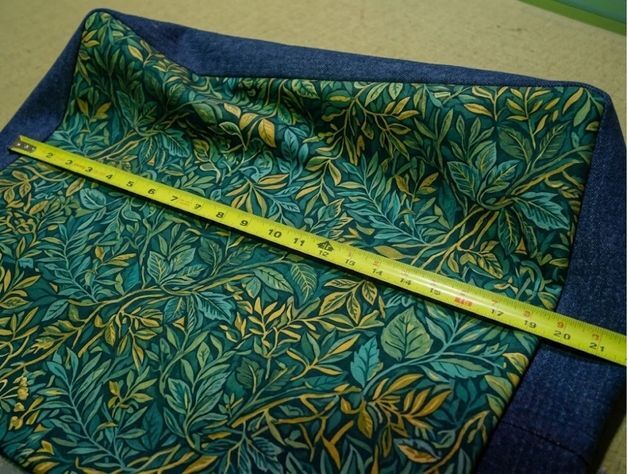
Instead: measure the fabric cover seam to seam.
Topics
Measuring takes about five minutes. Gather these first.

We accept measurements in inches or centimeters, so use whichever is easier for you.
Shop Custom Replacement Cushions

A few careful measurements are the difference between foam that fills your cushions and foam that fights them.

A replacement cushion only fits when the new foam matches the cover it goes into, not the worn-out foam you're taking out. Measure accurately and a tired sofa comes back to life. Measure the wrong thing and even the right foam will bulge, wrinkle, or sit too flat.
Measuring is simple once you know what to record and what to leave out. Below is the quick method for standard cushions, followed by what changes for feather-filled, T-shaped, and made-to-pattern shapes.
Measure the cover, not the old foam.
Not sure which applies? Contact us.
Before you even pick up the tape measure, know these. Almost every bad-fitting cushion comes from one of them, and catching it now saves you a reorder later.
Worn foam shrinks, sags, and loses its shape, so it reads smaller than the cushion was meant to be.
With foam still in the cover, the fabric stretches over the cushion's crown and your numbers come out too big.
Feather envelopes measure much larger than the foam that belongs inside them.
Foam cut to the exact size of a stretched cover can look baggy.
Not sure about your cushion? We are happy to help you measure it right.
Customer service is available 7AM–5PM PST. Prefer to talk it through? Book a free one-on-one design or help call at a time that works for you, or contact us any time.
Four steps take you from cover to cut size.
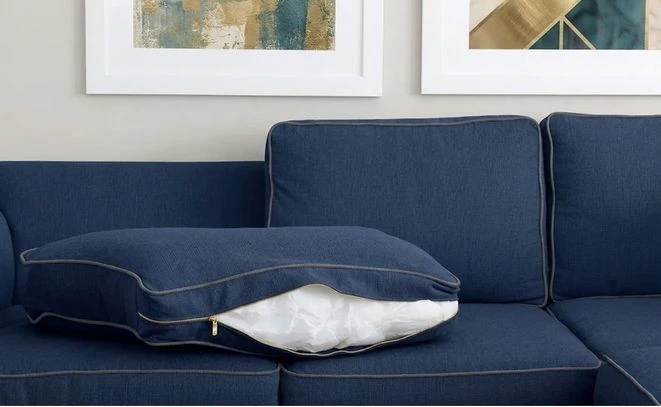
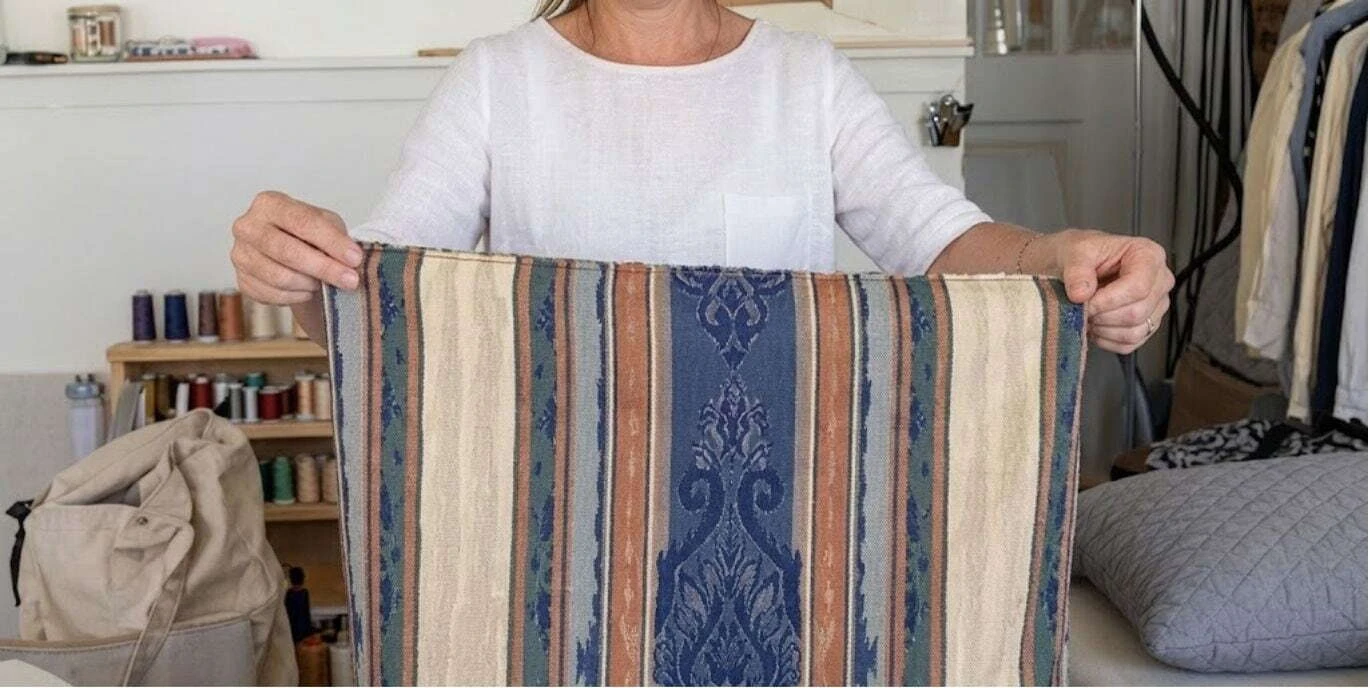
Unzip the cover, take out the old foam, and lay the cover flat on a hard surface with the zipper facing away from you. Smooth out any wrinkles, but don't stretch the fabric. You want the cover sitting at its true size.
Measuring the cover rather than the old foam is the single most important step. Old foam compresses, sags, and loses its shape over the years, so it reads smaller than the cushion was ever meant to be.
Draw the cushion on paper and label each side as you go. This keeps things clear for anything beyond a plain square, like T-cushions, L-cushions, and trapezoid seats, and keeps a multi-cushion order from getting mixed up.
Measure seam to seam, or between the piping if your cover has it. Take the length from back to front, the width from side to side, and the thickness from a side or back border panel where the fabric is least stretched or worn. Record all three on your sketch.
Now apply the Golden Rule of Foam Allowance from Section 01 to your final numbers. If you're ordering bare foam, add ½″ for standard deep cushions (4″ or thicker) or ¼″ for thin cushions (1″ to 3″). This ensures the foam fits snugly without over-stretching or distorting a thinner cover.
If you're adding a Dacron wrap, keep your foam order at the exact seam-to-seam size. The wrap fills out the cover and builds that beautiful, rounded crown over the foam core.
Still deciding? Contact us with your numbers and we'll confirm the exact cut.
Unzip the cover and look at how the cushion was actually built. Two minutes here is what stands between a perfect fit and a disappointing one. Here's exactly what to look for:
Measuring the cover seam to seam is still your main method. This is just an optional sanity-check for the thickness: because the foam and the boxing were sometimes built at different heights, a quick look inside confirms your cover measurement matches how the cushion was actually made.
The boxing, sometimes called the border, is the side panel of the cover that sets its height. Check whether the foam inside actually matches that border height, because the two are not always the same.
One caution: worn foam naturally shrinks and sags with age, so a core that now sits shorter than the boxing is usually just degraded, not built that way. Only match a thinner or thicker core if the difference is clearly deliberate design, like a thick down-wrap or a pronounced knife-edge, rather than ordinary wear.
Most cushions have a layer of soft polyester batting, usually called Dacron, wrapped around the foam. It's a filler that softens the edges and adds roundness, and it typically runs about ¾″ to 1″ thick. Never include it in your foam measurement.
If your wrap is thicker than usual (some run 1¼″ to 1½″), order a matching wrap so the finished cushion sits the same. You can often peel the existing wrap off and reuse it.
The crown is the gentle rise in the center of a finished cushion. It doesn't come from thicker foam. It comes from the Dacron wrap or filled envelope sitting over the foam while the border pulls the sides down. That's exactly why you measure at the seams and let the wrap create the loft.
Higher-end furniture often wraps the foam core inside a separate feather or down envelope. Because these covers were built to crown, or bulge elegantly, from the soft fill, the outer cover is cut larger than the foam sitting inside it. How you measure depends entirely on whether you're keeping your current envelope or replacing it.
Contact us about your cushionCouches use more than plain squares. Find your shape below, measure the way it describes, then pick that shape when you order.

Measure length, width, and thickness seam to seam. If the cover has piping, measure between the piping.
Measure square & rectangle→
Measure the wider front where it flares around the arm and the narrower back as two separate widths, plus length and thickness.
Measure T-cushion→
A T-cushion with a curved front. Take the front and back widths and the length, then trace the curved edge onto paper.
Measure curved T-cushion→
Measure each leg of the L on its own. Sketch the shape and label every side so nothing gets flipped.
Measure L-cushion→
Measure each leg of the L, then trace the curved edge so the radius comes out right.
Measure curved L-cushion→
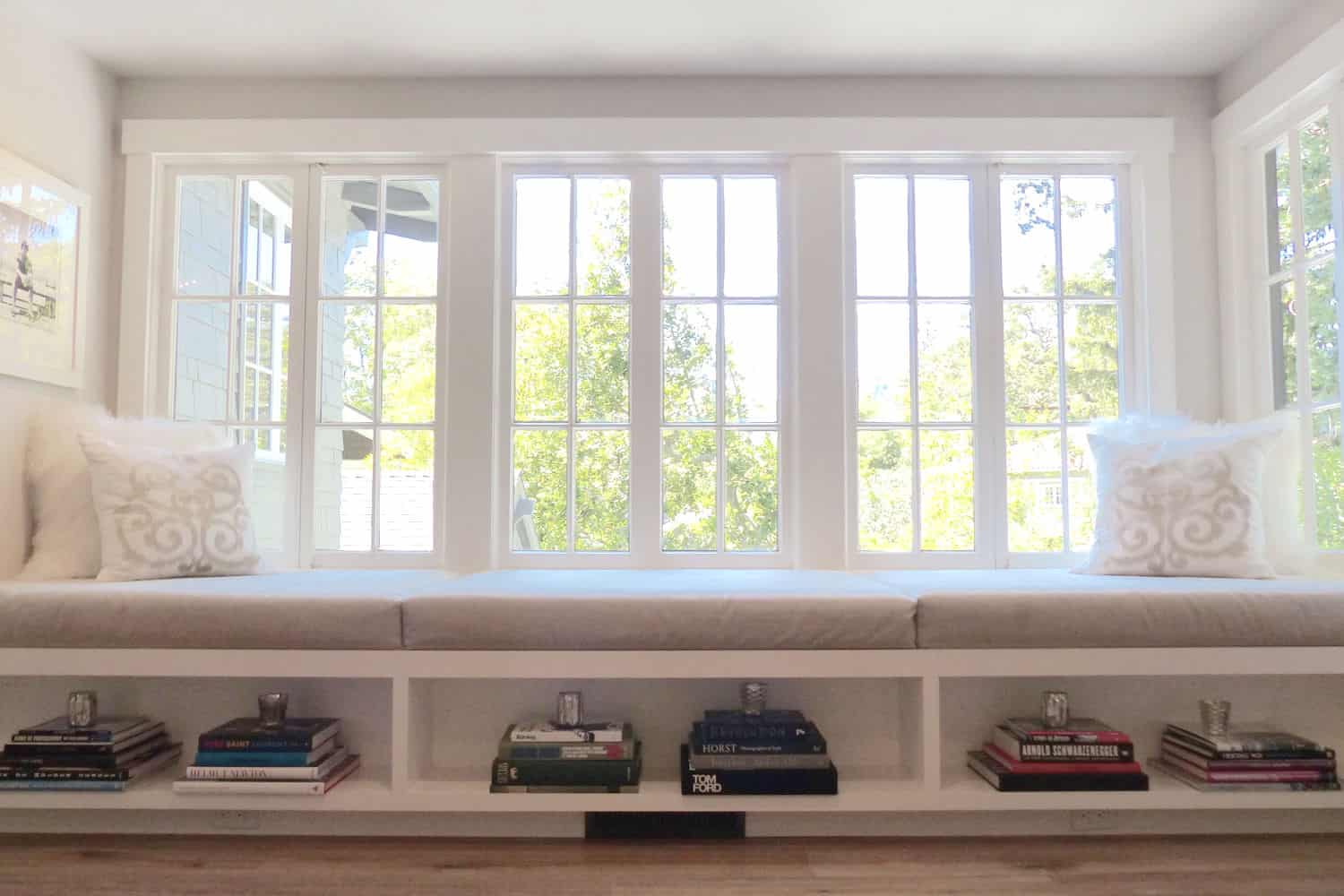
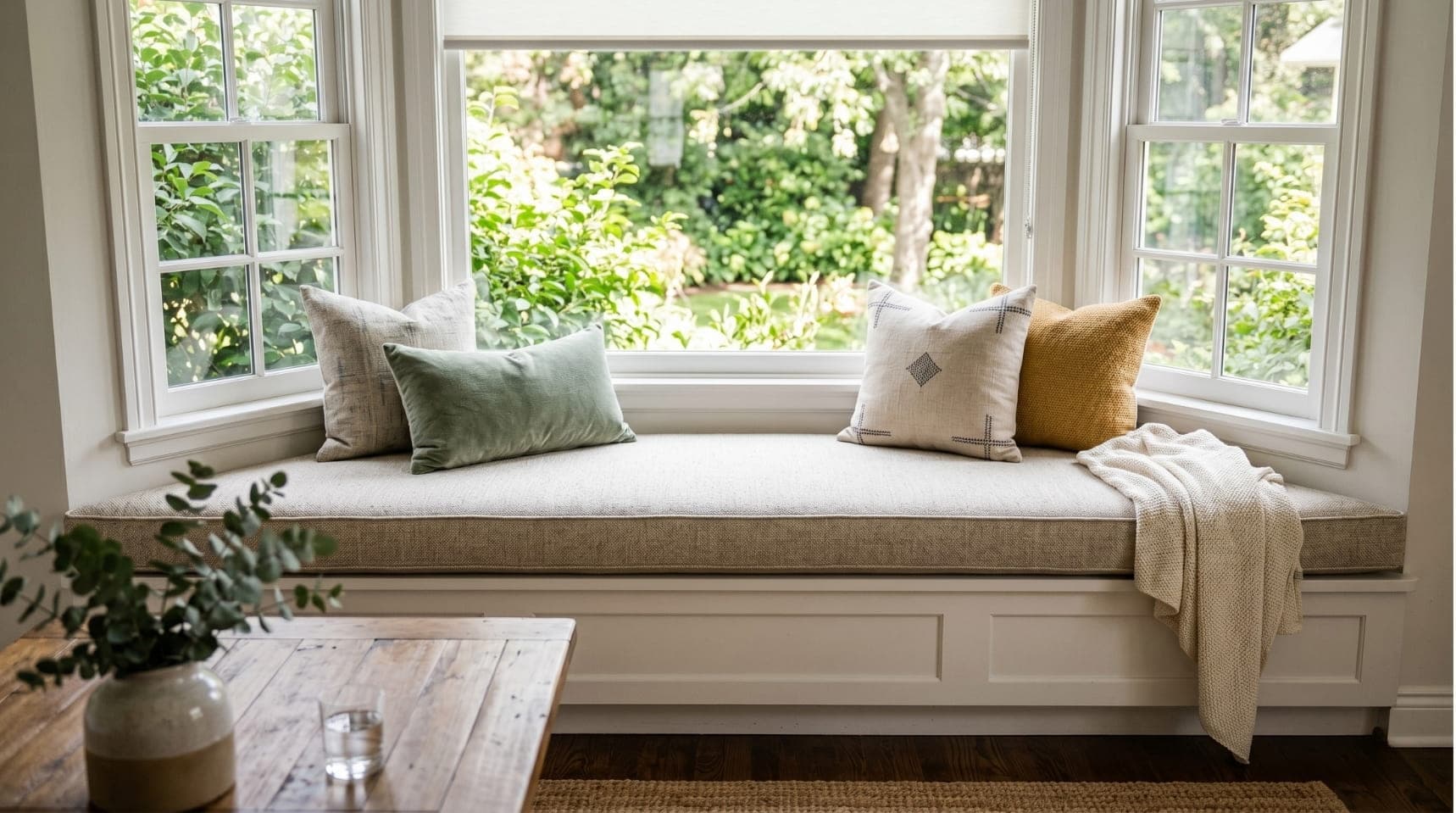
Measure the front width, the back width, and the depth front to back. Common for window seats and chair pads.
Measure trapezoid seat→
Measure the diameter across the widest point and the thickness.
Measure round→
For a cylindrical bolster, measure the diameter of the end and the overall length.
Measure bolster→
Measure it like a rectangle to the seams first, then mark the curve, or trace the curved edge onto paper.
Measure curved front→
Trace the cushion onto paper, follow the seam all the way around, and send us the pattern. We cut to it exactly.
Send us your pattern→Measuring a cushion comes down to one habit: measure the cover seam to seam, not the tired foam inside it. From there, the details take care of the rest. Let the Dacron wrap build the crown, keep the feather envelopes and refill them, and account for your cushion's real shape when you order. When in doubt, over-measure by a hair rather than under.
Do that, and the cushion you get back will look and sit the way it did the day the sofa was new. If your situation does not fit neatly into any of these, that is exactly what we are here for. Send us your measurements or a photo and we will help you get it right the first time.
Mike leads the family of foam and upholstery brands behind FoamOrder.com and Upholster.com, which have served consumer and commercial customers for over 20 years. A graduate of Duke University and Harvard Business School, he works directly on helping customers get the exact foam and cushions they need.